http://parentinfo.org/article/online-teen-speak-updated
The government have produced an online teen speak article that includes many slang words and acronyms that are said to be popular recently. At the beginning of the article it states that 'Speaking in coded language has been used for years by teenagers trying to hide something, or communicating in their own way'. Particular terms are said to come and go, may be said to be outdated in one country but then seem to be very popular somewhere else.
Although most of the words that are included in the lists are often heard and being spoken by teens many of them seem to be incorrect and aren't in fact used as much as the government may think. For example the word 'pre-ing' said to mean pre drinking isn't something that I have heard being spoken by teens before. Most teens would just simply say 'drinks' or 'pre-drinks'.
I would say that a lot of the words and acronyms aren't just used by teens and shouldn't be under the category of 'teen speak' or 'teen slang'. This article many focusing on the use of slang that teens use online. But the acronyms such as 'IK' meaning 'I know' and 'Ur' meaning 'your' aren't just used by teens and in fact are using everyday by people of all ages.
Being a teen myself I think that this article may be seen as quite humorous and slightly strange that the government has provided a article specifically on teen speak and slang. When I looked at the article myself I was actually quite shocked at the words and acronyms listed as a lot of it is rubbish and aren't commonly used at all!
I think that the list of acronyms is really quite strange and I guess may be seen as offensive to some. For example 'GNOC' apparently meaning 'get naked on camera' and 'IWSN' said to mean 'I want sex now' are most defiantly not very popular and aren't commonly used by teens. I haven't ever seen or heard half of the acronyms listed and i don't think many other teens have either.
Thursday, 4 February 2016

Thursday, 28 January 2016
Accent and dialect
Bristolian dialect case study
The Bristolian dialect is often stereotyped as being associated with farmers and having a tractor or a combine harvester and people often relate us to sounding like pirates. Others say that the Bristolian dialect gives the impression that we are uneducated and don't talk standard English. Most of the Bristol population are proud of their identity and are proud to be bristolian, meaning that they aren't bothered by the comments that people make on the way they talk and the sarcastic remarks they often make towards them. People who are not from Bristol often make comments on the phrases we use and sometimes don't understand what they mean, such as the phrases 'alright my luvver?' and 'ark at ee'.
An old YouTuber named 'Terry the odd job man' is one example of someone who is very proud to be Bristolian. He uploads videos on YouTube teaching people to speak Bristolian and how to use the phrases he uses. In his videos although he does emphasis the way Bristolian's speak we do use some of the phrases he mentions but not always in the way he represents them, he over-exaggerates for the entertainment of his viewers. Terry does have a very strong Bristolian accent and it seems like he is very proud of his identity. In this video, https://www.youtube.com/watch?v=XhgUeY1BExk , he talks about typical phrases that Bristolian's often use such as 'cold out ere init'.
The Bristolian dialect is often stereotyped as being associated with farmers and having a tractor or a combine harvester and people often relate us to sounding like pirates. Others say that the Bristolian dialect gives the impression that we are uneducated and don't talk standard English. Most of the Bristol population are proud of their identity and are proud to be bristolian, meaning that they aren't bothered by the comments that people make on the way they talk and the sarcastic remarks they often make towards them. People who are not from Bristol often make comments on the phrases we use and sometimes don't understand what they mean, such as the phrases 'alright my luvver?' and 'ark at ee'.
An old YouTuber named 'Terry the odd job man' is one example of someone who is very proud to be Bristolian. He uploads videos on YouTube teaching people to speak Bristolian and how to use the phrases he uses. In his videos although he does emphasis the way Bristolian's speak we do use some of the phrases he mentions but not always in the way he represents them, he over-exaggerates for the entertainment of his viewers. Terry does have a very strong Bristolian accent and it seems like he is very proud of his identity. In this video, https://www.youtube.com/watch?v=XhgUeY1BExk , he talks about typical phrases that Bristolian's often use such as 'cold out ere init'.
William Labov
Language and social class - William Labov
- Known as a founder of sociolinguistics
- Interested in how social class affected language usage
- Born December 4 1927, New Jersey U.S (age 88)
- Studied at Harvard (1948) and went to Columbia University
- Professor of linguistics at the University of Pennsylvania since 1971, semi-retired in 2014
Martha's vineyard-
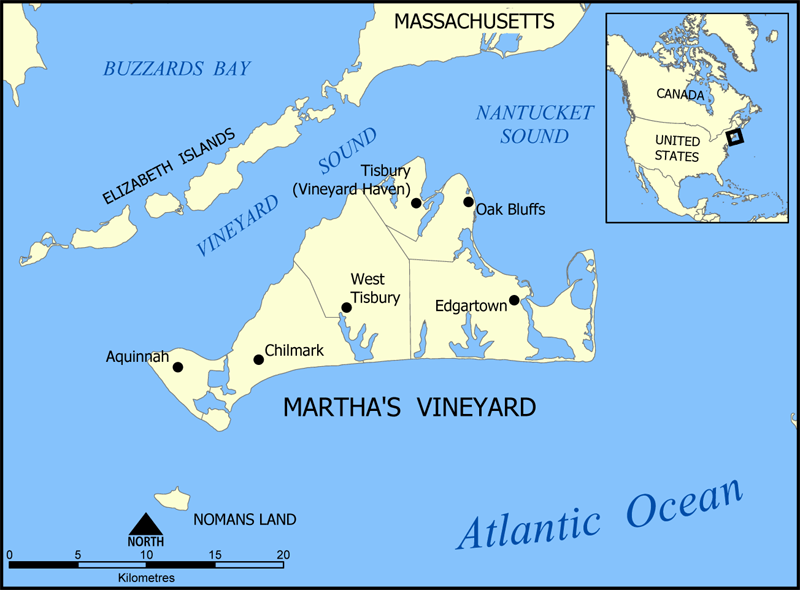 |
| A map of Martha's Vineyard |
- Labov came up with three groups of people;
- The 'summer people' - middle/upper middle class
- The 'islanders' - working/middle class
- The 'fishermen' - working class
Down Island was populated by mainly 'islanders' and the 'summer people'
Up Island was where the highly respected 'fishermen' were
The fisherman were viewed as a very desirable social group and the islanders looked up to them, they were respected by everyone. The fishermen also spoke with a very old, non standard punctuation. Labov found that the young 'islanders were making a deliberate shift to using the old-style pronunciation.
 |
| William Labov |
I think that the 'islanders' wanted to have their own identity and separating themselves from the 'summer people'; the tourists. The 'islanders' exploited this non-standard dialect.
Diphthong: a sound made by combining two vowels, like (oy) in oil. Diphthong comes from the Greek word diphthongs which means "having two sounds."
Department story study (1966) - New York, Manhattan
Cover prestige: deliberate 'roughness'
Overt prestige: standard English
Link between prestige and language = performance
- Three completely different department stores were tested out in Labov' study:
Saks 5th avenue (highest)
Macy's (middle)
Klein's (lowest)
The social stratification of the post-vocalic r' - The final 'r' sound at the end of the word such as beer, guard, fourth.
Labov decided to test the word 'fourth' by asking a question to workers at three different department stores; Saks, Macy's and Klein's which was designed to elicit the answer 'fourth floor' or something very similar. He would then ask them politely to repeat the answer to see if it was spontaneous in the way in which they pronounced it.
The results were that the pronunciation of /r/ depended on the social class;
62% Saks, 51% Macy's and 20% Klein's
Thursday, 14 January 2016
How do the language features reflect the contextual factors of your given text?
Text A: A transcript of a university student who is talking to her friend about starting the final year of her nursing course
The genre of this text is a transcript of a conversation, therefore the register is informal and also colloquial. I know that this text is informal because of the use of slang, for example the word 'yer' is a use of slang. As its a conversation between Kat and Sue the audience is therefore Sue and maybe also the people who are around them at this current time. The purpose and subject of this text is for Sue to talk to Kat and find out about her final year of her nursing course. This text is spoken with features of written mode (multi-model) as its a written copy of exactly whats been said.
Throughout this transcript i am able to identify many language feature. One feature that is in this transcript our paralinguistic features. An example of a paralinguistic feature within this transcript is when Kat laughs.The laughter suggests that Kat and Sue are quite good friends and are able to have a conversation with each other without being too nervous. The fact that they are friends helps the conversation to be more consistent and flow more fluently. The paralinguistic features in this text shows that the relationship between Kat and Sue is quite good and friendly although throughout the conversation the use of fillers and pauses appear quite frequently and this suggests that they are not completely comfortable with talking to each other for a long period of time and at some points they become quite nervous around each other, also they both have to think hard about their questions and answers. Another language feature which is used within this text is overlap, this happens several times throughout the transcript. This may also suggest that Kat and Sue aren't complete comfortable with each other and it can sometimes become slightly awkward throughout the conversation. Emphasis is also used in this transcript. For example in this transcript the words 'hard' and 'most' which are spoken by Kat are underlined to show emphasis. This helps to exaggerate on particular words and also on Kat' feelings.
Robin Lakoff
Robin Lakoff
Hedge: Using phrases like 'sort of' and 'kind of'
(Super) polite forms: 'Would you mind'
Tag questions: 'You're going to dinner, aren't you?'
Speak in italics: Intentional emphasis- equal to underlining in text
Empty adjectives: Divine, lovely
Hyper correct grammar: English prestige grammar
Direct quotation: Men paraphrase more often
Special lexicon: Use more words for things such as colour
Lack a sense of humor: Don't tell jokes and don't always understand the punch line
'wh' imperatives: Hidden commands
Speak less: Wait for others to talk first
Apologize: Even though it may not be their fault
Model constructions: Can, would, should, ought
Avoid coarse language: less use of swearing and offensive language
Indirect commands: 'Its cold in here, isn't it?'
Intensifiers: Very, so, really
I personally agree with most of what Robin Lakoff says about the language features females use. However there a few language features she mentions which i don't totally agree. Such as females lacking a sense of humor and not always understanding the punch lines and also that females avoid the use of coarse language like swearing and offensive language. Robin Lakoffs data was collected in 1975 which was 40 years ago and to me i believe that things have changed a lot since then. I think that things have changed since then simply because of the language features i notice used by males and females everyday in different situations. Also the data she collected was quite a small amount and was only from white middle-class women in university.
Hedge: Using phrases like 'sort of' and 'kind of'
(Super) polite forms: 'Would you mind'
Tag questions: 'You're going to dinner, aren't you?'
Speak in italics: Intentional emphasis- equal to underlining in text
Empty adjectives: Divine, lovely
Hyper correct grammar: English prestige grammar
Direct quotation: Men paraphrase more often
Special lexicon: Use more words for things such as colour
Lack a sense of humor: Don't tell jokes and don't always understand the punch line
'wh' imperatives: Hidden commands
Speak less: Wait for others to talk first
Apologize: Even though it may not be their fault
Model constructions: Can, would, should, ought
Avoid coarse language: less use of swearing and offensive language
Indirect commands: 'Its cold in here, isn't it?'
Intensifiers: Very, so, really
I personally agree with most of what Robin Lakoff says about the language features females use. However there a few language features she mentions which i don't totally agree. Such as females lacking a sense of humor and not always understanding the punch lines and also that females avoid the use of coarse language like swearing and offensive language. Robin Lakoffs data was collected in 1975 which was 40 years ago and to me i believe that things have changed a lot since then. I think that things have changed since then simply because of the language features i notice used by males and females everyday in different situations. Also the data she collected was quite a small amount and was only from white middle-class women in university.
Noun revision
Nouns:
There are two areas;
Common - Concrete, abstract and group
Concrete: Physical thing e.g. table, dictionary
Abstract: Emotions/feeling e.g. despair, jot
Group: Collective e.g. family, herd
Proper: unique, CAPS e.g. sellotape
Noun phrases:
- unit of meaning In a sentence built around a noun
- does not contain a main verb
There are two areas;
Common - Concrete, abstract and group
Concrete: Physical thing e.g. table, dictionary
Abstract: Emotions/feeling e.g. despair, jot
Group: Collective e.g. family, herd
Proper: unique, CAPS e.g. sellotape
Noun phrases:
- unit of meaning In a sentence built around a noun
- does not contain a main verb
Thursday, 10 December 2015
Accent and dialect
Accent and dialect
Bristol dialect quiz-
Cheers drive - thanking the bus driver
Dinnum - didn't they/don't know
Slider - a slide
Ideawl - idea
Gashead - Bristol rovers fan
Jasper - wasp
Pitchin - the snow is settling
Peepaw - people
Pitcher - picture
Yer tiz - here it is
Ark at ee mind - look at him
Overt prestige - talking properly/trying to speak standard English
Covert prestige - using your regional dialect and using your dialect for status
Accent - features of pronunciation (the speech sounds) that show regional and/or social identity
Dialect - features of lexis and grammar that show the regional or social background of the speaker
(your accent is part of your dialect)
What stereotypes are associated with the Bristolian dialect?
Bristol dialect quiz-
Cheers drive - thanking the bus driver
Dinnum - didn't they/don't know
Slider - a slide
Ideawl - idea
Gashead - Bristol rovers fan
Jasper - wasp
Pitchin - the snow is settling
Peepaw - people
Pitcher - picture
Yer tiz - here it is
Ark at ee mind - look at him
Overt prestige - talking properly/trying to speak standard English
Covert prestige - using your regional dialect and using your dialect for status
Accent - features of pronunciation (the speech sounds) that show regional and/or social identity
Dialect - features of lexis and grammar that show the regional or social background of the speaker
(your accent is part of your dialect)
What stereotypes are associated with the Bristolian dialect?
- people have the impression that we are farmers
- tractors and combine harvesters
- uneducated
- multi - cultural
- pirates
- working class
- males (slightly stronger)
- in his videos he does emphasis the way Bristolian's speak but we do use some of the phrases he mentions but not always in the way he represents them
- he's very proud of his identity
- over exaggerated for entertainment
- Somerset/south Bristol accent
- strong Bristolian accent = links to country
- dialect is dying out/being watered down - dialect levelling
- people are conscious of their accents and the attitudes that come with it
- accents are still prominent
- elocution lessons - "speak proper"
Subscribe to:
Posts (Atom)